
Sport Variance in Kids: Why Playing Multiple Sports Beats Early Specialization
Why Kids Should Play Multiple Sports: The Surprising Benefits of Sport Variance Over Early Specialization
In today’s competitive youth sports world, many parents push kids to specialize early in one sport, striving for scholarships or professional success, but what if that approach is actually holding them back? This discussion explores early specialization (year-round focus on one sport, often before age 12-14) versus sport variance (sampling multiple sports for fun and development). This choice can have a huge impact on the long term health and success of the player. As someone who has gone through this process and now works with young athletes, I’ve seen how varied movement patterns protect growing bodies from overuse injuries and support overall wellness. Let’s look at the evidence from movement experts and research studies.
What Is Sport Variance and Why Does It Matter for Growing Kids?
The idea of sport variance is having a child play 2-4 different sports during different seasons, allowing for stress to be spread to different areas of the body. The American Academy of Pediatrics (AAP) recommends multi-sport participation until puberty to decrease injuries, stress, and burnout (AAP Clinical Report, 2016 & updates). Each sport has common injuries because of a high amount of stress and load on specific body parts. For example baseball = shoulder/elbow injuries, football = concussion, soccer = knee injuries. Sport variance spreads the stress/load out, resulting in a drop in injury occurrence. This variance also promotes diverse motor skills development, strengthens different muscle groups, improves coordination/agility, and transfers skills across sports (e.g., basketball agility helps soccer).
The Hidden Risks of Early Sport Specialization
Overuse injuries (e.g., stress fractures, tendon issues) are 70-93% more likely in specialized kids and twice as likely for lower extremity injuries (Jayanthi, N. A., Post, E. G., Laury, T. C., & Fabricant, P. D. (2019). Increased psychological stress, anxiety, reduced enjoyment results in approximately 70% of kids quitting organized sports by age 13 (Brenner, J. S., LaBotz, M., Sugimoto, D., & Stracciolini, A. (2019). Many pros played multiple sports early; in fact, there is no quality evidence showing that intense single-sport training before puberty is required for elite success. Studies do show however that specialized athletes have higher overuse injury rates. As a result, AAP and NFHS recommend implementing a delay in specialization until late adolescence (~15-16) for most sports to minimize risks (McLellan, M., Allahabadi, S., & Pandya, N. K. (2022).
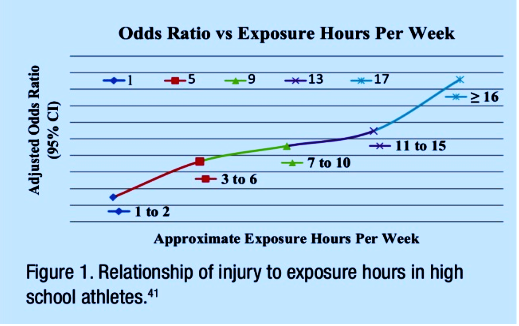
*Relationship between the amount of hours an athlete spends in a sport and the odds of an injury occurring (Jayanthi, N., Pinkham, C., Dugas, L., Patrick, B., & Labella, C. (2013).
Proven Benefits of Playing Multiple Sports
Sport variance reduces overuse injuries by varying demands, while also developing well-rounded strength, balance, and neuromuscular control (protective against common issues like ACL tears). Variance reduces the likelihood of sport specific injury and burnout as well as fosters a long term love for sport and activity. Multi-sport athletes often excel in one particular sport later (e.g., better motor transfer, sustained participation). In fact, many elite athletes like Michael Jordan, Deion Sanders, Bo Jackson, and Patrick Mahomes all played multiple sports throughout adolescence and specialized later.
How Sport Variance Supports Growing Bodies (Wellness Perspective)
Varied movements prevent imbalances that lead to posture issues, back/neck pain, or joint stress. Growing kids’ bodies thrive on diverse loading; early specialization can overload growth plates. Parents/guardians should monitor work load, proper warm-ups, and recurring pain. Below is a bullet list of the top five reasons Forward Health and Wellness recommends sport variance over sport specialization at a young age.
Overuse Injury Risk:
Early-specialized kids have 1.67 to 2.25 times higher odds of developing overuse injuries compared to multi-sport or non-specialized peers (e.g., tendonitis, stress fractures, growth plate issues).
Highly specialized youth athletes are more than twice as likely (often cited as 2x or greater) to experience serious overuse injuries overall.
In specific cases (e.g., youth soccer or baseball), highly specialized athletes show up to 5.49 times higher likelihood of reporting overuse knee injuries.
General Injury Rates:
Specialized high school athletes face significantly elevated rates of both overuse and acute injuries compared to multi-sport athletes.
Multi-sport participation is linked to lower overall injury frequency, especially lower extremity injuries.
Burnout and Dropout:
An estimated 70% of young athletes quit organized sports by age 13, with early specialization contributing to higher burnout, reduced enjoyment, and increased psychological stress/anxiety.
Early specializers report higher rates of burnout and attrition due to pressure and overtraining.
Training Volume and Risk Correlation:
Athletes with high specialization and training volumes exceeding certain thresholds (e.g., >16 hours/week or year-round single-sport focus) show a linear increase in injury risk (odds ratios up to 8.28 in some studies for excessive exposure).
Long-Term Outcomes:
Multi-sport kids often have better sustained participation into adulthood, fewer missed games due to injury, and comparable or better long-term athletic performance (no strong evidence that early specialization is required for elite success in most sports).
Conclusion
Playing different sports can be one way to vary activity and support enjoyment. No participation pattern guarantees freedom from injury or advancement to elite competition. At Forward Health and Wellness, we support young athletes with assessment and activity guidance suited to their age, symptoms, and goals.
Worried about your child’s sports routine or noticing aches from repetitive play? Schedule a consultation to assess their posture, alignment, and movement patterns. Call (214)506-3029 or book online today!
Move Forward.
Cites:
Brenner, J. S. (2024b). Overuse Injuries, Overtraining, and Burnout in Young Athletes. Retrieved from Aap.org website: https://publications.aap.org/pediatrics/article/153/2/e2023065129/196435/Overuse-Injuries-Overtraining-and-Burnout-in-Young
Brenner, J. S., LaBotz, M., Sugimoto, D., & Stracciolini, A. (2019). The Psychosocial Implications of Sport Specialization in Pediatric Athletes. Journal of athletic training, 54(10), 1021–1029. https://doi.org/10.4085/1062-6050-394-18
Jayanthi, N., Pinkham, C., Dugas, L., Patrick, B., & Labella, C. (2013). Sports specialization in young athletes: evidence-based recommendations. Sports health, 5(3), 251–257. https://doi.org/10.1177/1941738112464626
Jayanthi, N. A., Post, E. G., Laury, T. C., & Fabricant, P. D. (2019). Health Consequences of Youth Sport Specialization. Journal of athletic training, 54(10), 1040–1049. https://doi.org/10.4085/1062-6050-380-18
McLellan, M., Allahabadi, S., & Pandya, N. K. (2022). Youth Sports Specialization and Its Effect on Professional, Elite, and Olympic Athlete Performance, Career Longevity, and Injury Rates: A Systematic Review. Orthopaedic journal of sports medicine, 10(11), 23259671221129594. https://doi.org/10.1177/23259671221129594